
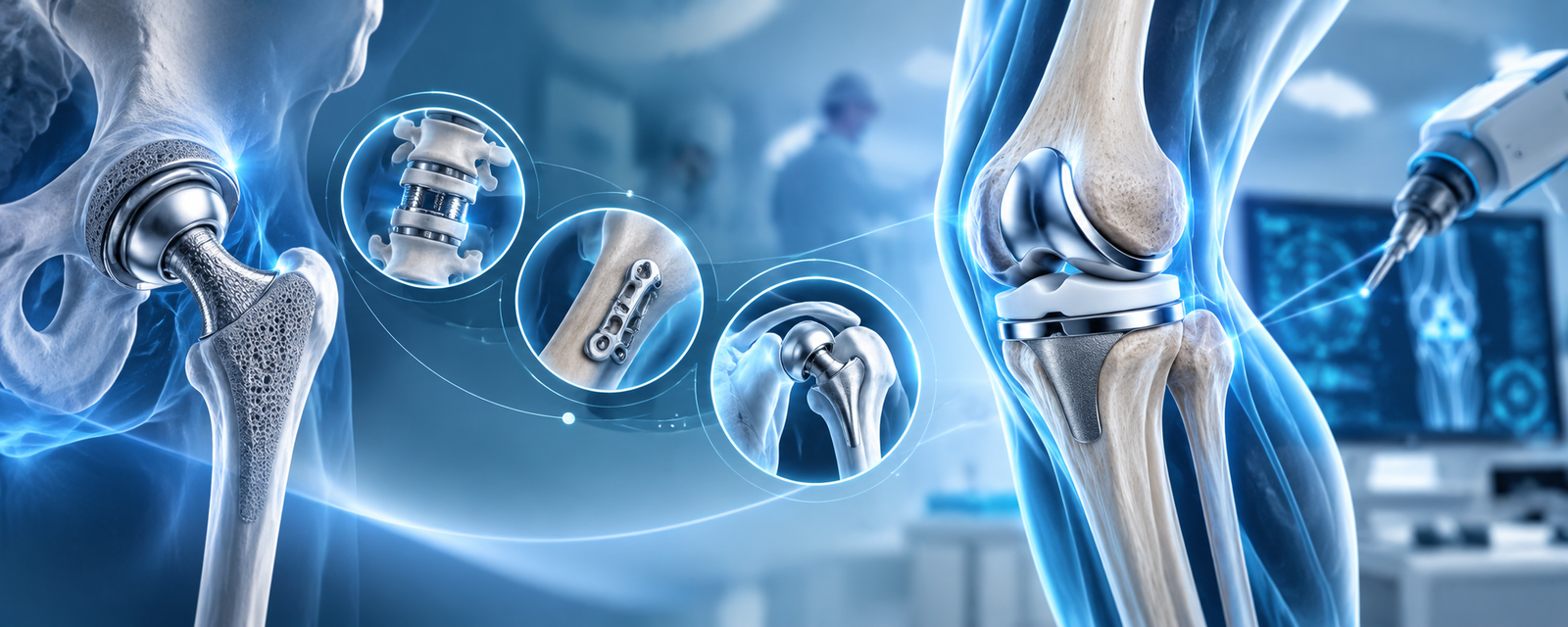
Orthopedic implants have transformed modern healthcare by helping millions of patients recover from injuries, manage degenerative conditions, and regain mobility. From joint replacement systems to trauma fixation devices, these medical solutions play an essential role in improving quality of life. As healthcare technology continues to advance, the future of orthopedic implants is becoming increasingly focused on precision, biocompatibility, personalization, and long-term performance.
For orthopedic implant manufacturers, these developments represent an opportunity to combine advanced engineering with clinical needs and deliver safer, more reliable solutions for healthcare professionals and patients worldwide.
Advanced Materials for Better Performance
One of the most important areas of innovation in orthopedic implants is material development. Traditional materials such as stainless steel, titanium, and cobalt-chromium alloys continue to be widely used because of their strength, durability, and established performance.
However, ongoing research is introducing new material technologies designed to improve implant performance and compatibility with the human body. Titanium alloys, for example, offer an excellent balance between strength and relatively low weight. Their corrosion resistance and biocompatibility make them suitable for many orthopedic applications.
Future developments are also expected to focus on materials that can better support bone integration, reduce wear, and improve the long-term stability of implants.
3D Printing and Additive Manufacturing
Additive manufacturing, commonly known as 3D printing, is another technology shaping the future of orthopedic implants. Unlike traditional manufacturing methods, 3D printing can create highly complex structures that may be difficult to produce using conventional techniques.
This technology can be particularly valuable for implants with porous or lattice structures. Such designs can encourage bone growth and improve the connection between the implant and surrounding bone.
3D printing also provides opportunities for producing patient-specific implants. By using medical imaging data, manufacturers can develop implant designs that better match an individual patient’s anatomy. This personalized approach may improve surgical accuracy and contribute to better clinical outcomes.
Patient-Specific and Personalized Implants
Every patient has unique anatomical characteristics. As digital healthcare technologies develop, orthopedic implant manufacturing is moving toward greater personalization.
Computer-aided design, 3D imaging, and advanced modeling allow engineers and medical professionals to evaluate anatomical requirements before surgery. These technologies can support the development of implants that are tailored to specific patient needs.
Personalized orthopedic solutions can also help surgeons plan procedures more effectively. Instead of relying solely on standard implant sizes and configurations, future systems may provide greater flexibility and customization.
Smart and Connected Orthopedic Technologies
The integration of digital technology into medical devices is another emerging area of innovation. Future orthopedic implants may incorporate advanced sensing technologies capable of monitoring factors such as load, pressure, movement, or changes around the implant.
Although these technologies are still developing, smart orthopedic systems could provide valuable information to healthcare professionals. Data from connected devices may help support postoperative monitoring and identify potential issues at an earlier stage.
The combination of medical engineering, sensors, data analysis, and digital healthcare could create new possibilities for patient monitoring and long-term orthopedic care.
Precision Manufacturing and Quality Control
Innovation in orthopedic implants is not limited to new materials or technologies. Precision manufacturing remains fundamental to producing safe and dependable medical devices.
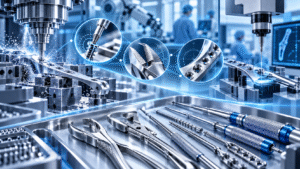
Modern CNC machining, advanced inspection systems, surface finishing technologies, and strict quality-control procedures allow manufacturers to achieve the dimensional accuracy required for orthopedic components. Even small variations can be important when producing medical devices designed for precise surgical applications.
A strong manufacturing system therefore combines skilled engineering teams, modern production equipment, carefully controlled processes, and rigorous inspection. Consistency at every stage of production is essential for maintaining product quality and reliability.
The Growing Importance of Global Standards
As orthopedic products are distributed across international markets, compliance with applicable regulatory and quality requirements is increasingly important. Manufacturers must understand the standards and documentation requirements relevant to the markets they serve.
A commitment to quality management helps manufacturers maintain consistent processes, traceability, inspection procedures, and product reliability. For international healthcare customers, working with a manufacturer that understands these requirements can provide greater confidence throughout the supply chain.
The Future of Orthopedic Manufacturing
The future of orthopedic implants will likely be shaped by the combination of advanced materials, digital design, additive manufacturing, personalized solutions, and intelligent technologies. At the same time, fundamental principles such as precision, quality, reliability, and rigorous manufacturing processes will remain essential.
At Strength International, we believe that innovation and manufacturing excellence must work together. Based in Sialkot, Pakistan, we combine technical expertise, modern production capabilities, and a commitment to quality to serve customers in orthopedic healthcare markets around the world.
As orthopedic technology continues to evolve, manufacturers have an important role in turning innovative concepts into dependable medical solutions. By investing in technology, refining manufacturing processes, and maintaining a strong focus on quality, the orthopedic industry can continue to support better healthcare outcomes and improve mobility for patients worldwide.

Add comment