
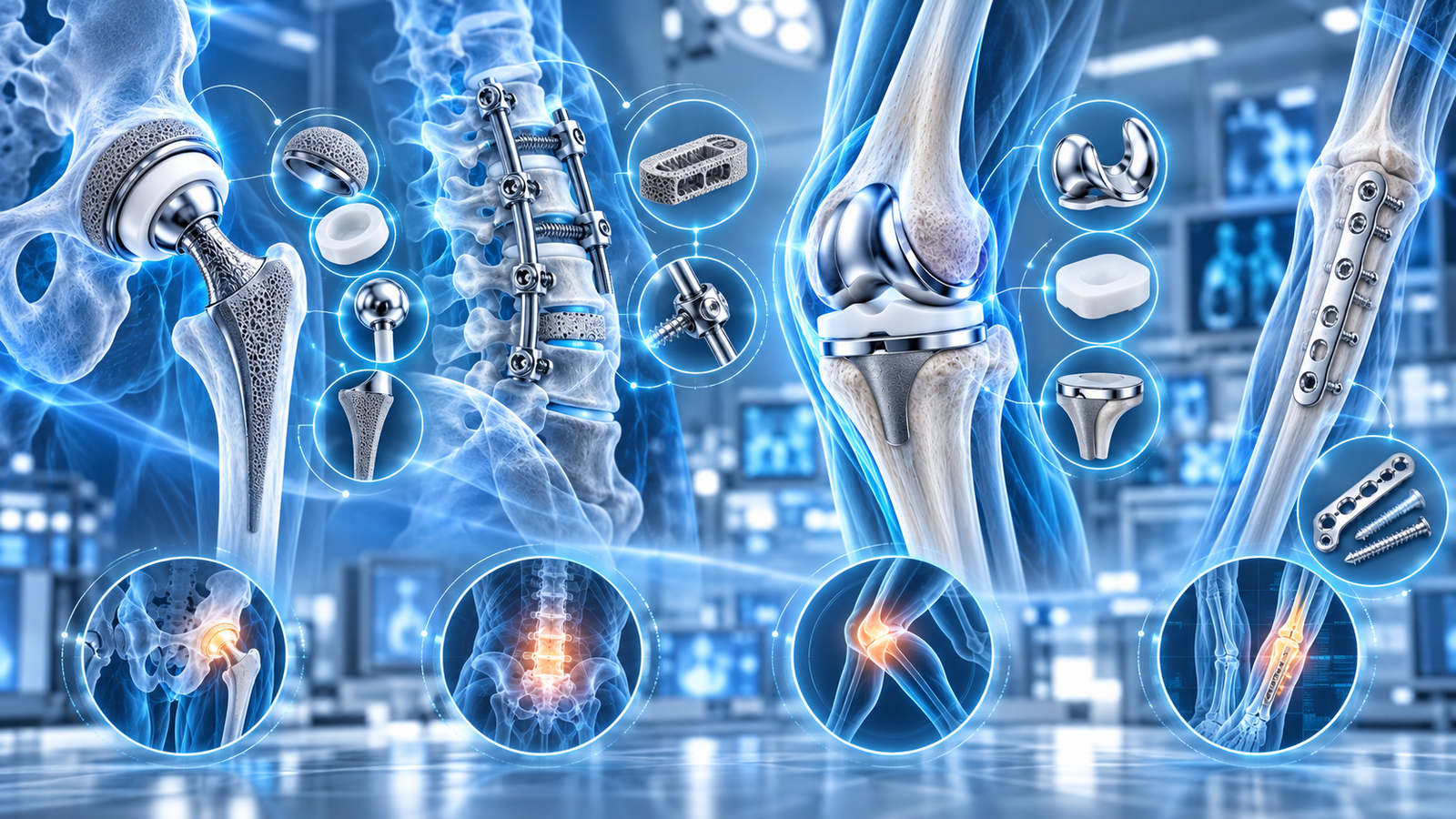
Orthopedic implants are an important part of modern medical care, helping surgeons treat fractures, joint problems, bone deformities, and other musculoskeletal conditions. These medical devices are designed to support, stabilize, replace, or restore damaged bones and joints, helping patients recover mobility and improve their quality of life.
As orthopedic technology continues to advance, manufacturers are developing implants with improved materials, precision designs, and manufacturing techniques. Understanding the different types of orthopedic implants, the materials used to produce them, and their applications provides valuable insight into this important area of healthcare.
What Are Orthopedic Implants?
Orthopedic implants are medical devices designed to be placed inside or attached to the human body to support the musculoskeletal system. Depending on their purpose, they may stabilize a fractured bone, replace a damaged joint, correct a deformity, or support the healing process.
Orthopedic implants are commonly used in procedures involving the spine, hip, knee, shoulder, ankle, and other parts of the skeletal system. Their design varies according to the anatomical area, surgical procedure, and specific requirements of the patient.
Because these devices are used in medical procedures, accuracy, material quality, durability, and manufacturing consistency are essential considerations.
Common Types of Orthopedic Implants
Orthopedic implants can be divided into several major categories based on their application.
Joint Replacement Implants
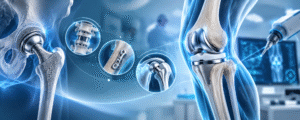
Joint replacement systems are designed to replace damaged or severely worn joint surfaces. Hip and knee replacement implants are among the most widely recognized examples.
Hip implants may include components such as femoral stems, femoral heads, and acetabular components. Knee replacement systems can include femoral, tibial, and patellar components designed to restore joint movement.
These implants are engineered to provide stability, functionality, and appropriate interaction between the components.
Trauma Fixation Implants
Trauma implants are commonly used to stabilize fractured or damaged bones while they heal. Examples include bone plates, screws, intramedullary nails, and other fixation devices.
Plates can be positioned along the surface of a bone and secured using screws, while other fixation systems may be placed inside the bone depending on the fracture and surgical approach.
The design and dimensions of these implants must be carefully controlled to support the intended surgical application.
Spinal Implants
Spinal implants are used in procedures designed to stabilize or support sections of the spine. Depending on the procedure, spinal systems may include screws, rods, cages, plates, and other specialized components.
These implants require precise engineering because the spinal structure is complex and implant positioning can be highly important during surgery.
Sports Medicine Implants
Sports medicine implants are used in procedures involving injuries to structures such as ligaments, tendons, and joints. Depending on the application, these products may include fixation devices and specialized components designed to support tissue repair or reconstruction.
Materials Used in Orthopedic Implants
Material selection is one of the most important aspects of orthopedic implant manufacturing. Materials must provide appropriate mechanical properties while being suitable for their intended medical application.
Titanium and Titanium Alloys
Titanium and its alloys are widely used in orthopedic applications because of their strength, relatively low weight, corrosion resistance, and established use in medical devices.
Titanium can also be suitable for applications where interaction with bone is an important consideration. Its combination of mechanical performance and material characteristics makes it an important option for various orthopedic products.
Stainless Steel
Stainless steel is another established material used in orthopedic applications, particularly in certain trauma fixation products and surgical instruments. Its strength, durability, and corrosion resistance make it suitable for demanding manufacturing requirements.
Different grades and specifications may be selected depending on the intended application and applicable requirements.
Cobalt-Chromium Alloys
Cobalt-chromium alloys are known for their strength, hardness, wear resistance, and corrosion resistance. These characteristics can make them suitable for particular orthopedic applications, including certain joint replacement components.
Material selection ultimately depends on the design, intended use, manufacturing process, and applicable medical requirements.
Applications of Orthopedic Implants
Orthopedic implants are used across a wide range of medical procedures. They can help stabilize fractures, replace damaged joint surfaces, support spinal structures, and assist in reconstructive procedures.
Their applications include:
Hip and knee replacement procedures
Fracture fixation and trauma surgery
Spinal stabilization
Joint reconstruction
Bone deformity correction
Sports injury procedures
Orthopedic reconstruction
Each application requires a specific combination of design, materials, manufacturing precision, and quality control.
Importance of Precision Manufacturing
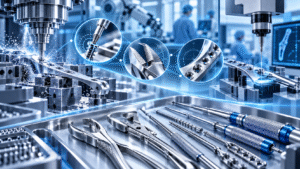
The performance of an orthopedic implant depends heavily on manufacturing accuracy. Critical dimensions, surface characteristics, tolerances, and material properties must be carefully controlled throughout production.
Modern technologies such as CNC machining, CAD-based design, precision inspection, surface finishing, and advanced quality-control systems help manufacturers achieve consistent results.
A well-controlled manufacturing process also supports traceability and repeatability, which are important considerations when producing medical devices for global healthcare markets.
The Future of Orthopedic Implants
The orthopedic implant industry continues to evolve through advances in digital design, additive manufacturing, material science, and personalized medical solutions. 3D printing, for example, can enable the production of complex structures and customized designs that may be difficult to achieve through conventional manufacturing methods.
Future developments may also focus on patient-specific implants, advanced surface technologies, improved materials, and digitally supported surgical planning.
Orthopedic Manufacturing at Strength International
At Strength International, we understand the importance of precision, consistency, and quality in orthopedic manufacturing. Based in Sialkot, Pakistan, we combine technical expertise, modern production capabilities, and controlled manufacturing processes to serve customers across international healthcare markets.
From orthopedic implants and fixation systems to specialized orthopedic instruments, our focus is on developing and manufacturing products that meet demanding requirements for accuracy, reliability, and performance.
As orthopedic medicine continues to advance, high-quality manufacturing will remain essential to transforming innovative designs into dependable medical solutions. Through precision engineering, advanced technology, and a commitment to quality, the orthopedic industry can continue supporting healthcare professionals and improving outcomes for patients around the world.


Add comment